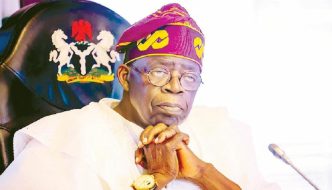





Nigeria once again finds itself at the tragic intersection of insecurity, political distraction, and public despair. While terrified schoolchildren, women, and teachers remain in captivity in Oyo State, the political elite within the ruling All Progressives Congress (APC) appear consumed by another battle entirely — a fierce internal struggle for power ahead of the 2027 elections.
To many Nigerians, the contrast is disturbing. On one side are grieving families, traumatised communities, and abducted pupils crying for rescue from the forests of Oriire Local Government Area of Oyo State. On the other side are political gladiators engaged in bitter accusations of manipulation, delegate-buying, exclusion, and rigging in the ongoing APC primary contests across several states.
For many citizens, this moment has become symbolic of a government increasingly detached from the pain of ordinary Nigerians.
The Horror in Oyo: Schools Turned Into Crime Scenes
The recent mass abduction in Oyo State has sent shockwaves across the country and shattered the long-held belief that the South-West was relatively insulated from the terror of mass school kidnappings.
Reports indicate that armed gunmen invaded schools in the Ahoro-Esiele and Yawota communities in Oriire Local Government Area on May 15, 2026, abducting pupils, teachers, women, and community residents in coordinated attacks that resembled the brutal school raids previously associated with northern Nigeria.
Among the schools attacked were Community Grammar School, Baptist Nursery and Primary School, and L.A. Primary School.
During the assault, at least two persons were reportedly killed, including an assistant headmaster and a commercial motorcyclist. Several teachers and dozens of pupils were whisked away into the forests by heavily armed kidnappers.
The emotional devastation across Ogbomoso and surrounding communities has been overwhelming. Parents have described sleepless nights, schools have become ghost grounds, and teachers staged protests demanding immediate rescue efforts.
But what transformed an already horrifying tragedy into national outrage was the reported killing of one of the abducted teachers, Mr. Michael Oyedokun.
According to multiple reports, a disturbing video allegedly released by the abductors showed Mr. Oyedokun being beheaded while in captivity. The images and reports triggered grief, anger, and fear across Nigeria. Mr. Oyedokun, described as a dedicated mathematics teacher, became yet another tragic symbol of Nigeria’s worsening insecurity crisis.
The Oyo State Police Command confirmed it was reviewing the viral footage, while Governor Seyi Makinde acknowledged the killing and promised intensified rescue efforts.
Yet, critics have questioned the response from the Federal Government.
As outrage spread across social media and communities mourned, many Nigerians complained that the Presidency appeared more visibly engaged in political consultations and APC power calculations than in publicly addressing the trauma unfolding in Oyo State.
For grieving families, silence from the nation’s highest office felt deafening.
Crying Hostages, Crying Nation
Perhaps the most painful dimension of the tragedy is the reported condition of those still in captivity. Residents and relatives say some abducted victims, including women and children, were heard crying and pleading for rescue in videos and audio messages circulated after the attack.
The psychological impact on families cannot be overstated.
Children who should be learning in classrooms are instead trapped in forests under armed captivity. Mothers are praying through tears. Fathers are selling possessions in desperate attempts to gather ransom money. Communities now live under fear of repeated attacks.
The Oyo abduction is not merely a local tragedy; it is another indictment of a nation struggling to protect its most vulnerable citizens.
Nigeria already carries one of the highest numbers of out-of-school children globally, and repeated attacks on schools continue to deepen fear among parents and communities.
While Nigerians Mourn, APC Battles Itself
At the same time this national tragedy unfolded, the APC became engulfed in another wave of internal crisis surrounding its primaries and political alignments ahead of 2027.
Across Lagos, Edo, Ogun, Ekiti, Osun, Rivers, Delta, Kogi, Adamawa, and other states, aspirants and party stakeholders have publicly raised allegations of manipulation, imposition of candidates, delegate irregularities, exclusionary tactics, and vote-buying.
In Lagos, long regarded as the political fortress of President Bola Ahmed Tinubu, aggrieved aspirants and party factions have repeatedly accused influential blocs of imposing preferred candidates and sidelining grassroots contestants.
In Edo and Ogun States, opposition voices within the APC have alleged skewed delegate lists and opaque selection procedures. In Rivers and Delta, internal factions continue to exchange accusations over control of party structures and electoral machinery.
In Osun and Ekiti, complaints over consensus arrangements and perceived predetermined outcomes have fuelled resentment among aspirants who argue that internal democracy within the ruling party is steadily collapsing.
In Adamawa, Kogi, and other northern states, some aspirants have openly warned that the conduct of APC primaries threatens public confidence in future elections.
Whether these allegations are ultimately proven or not, the political optics are damaging.
For many Nigerians, the message appears troubling: if a ruling party cannot transparently manage its own internal elections, how can citizens trust it to guarantee fairness in a national election?
APC Rigging Out APC?
One phrase increasingly echoed in political circles is that “APC is rigging out APC.”
The irony is striking.
The same accusations traditionally exchanged between opposition parties and ruling governments are now emerging from within the ruling party itself.
Aspirants are accusing fellow APC members of deploying state influence, manipulating delegates, and suppressing dissenting voices.
This internal crisis has become more than a party affair; it has evolved into a national concern about democratic credibility.
Critics now warn that the conduct of these primaries may serve as a dangerous preview of what could happen during the 2027 general elections if electoral institutions fail to maintain independence and transparency.
For citizens already battling inflation, insecurity, unemployment, and economic hardship, confidence in democracy is weakening.
The Bigger Question Before 2027
The central question confronting Nigerians today is no longer merely political. It is moral: Can a government asking for renewed trust in 2027 convincingly explain why schoolchildren continue to be abducted? Why teachers are beheaded? Why communities live in fear? Why insecurity keeps expanding into regions once considered relatively safe?
Can a ruling party consumed by internal accusations of manipulation genuinely present itself as the custodian of democratic integrity?
And perhaps most importantly: what happens to a nation when political ambition begins to overshadow human suffering?
The Oyo school abductions are not isolated incidents. They are symptoms of a broader national emergency — one in which insecurity, political impunity, and public frustration are converging dangerously.
Nigerians are watching.
Parents are watching.
The victims in Oyo State are watching.
And history, too, is watching.
- By 2027, Nigerians will not merely vote based on party slogans or campaign rallies. They will vote based on memory — the memory of who stood with them in moments of national pain, and who appeared too distracted by politics to hear the cries coming from the forests.
Dozie Nwankodu is an advocate for good governance. He is the Publisher/Editor-In-Chief, GlobalReporters.ng
*He writes from Lagos, Nigeria. Email: onlineeditorsngr@gmail.com. 08025943729