


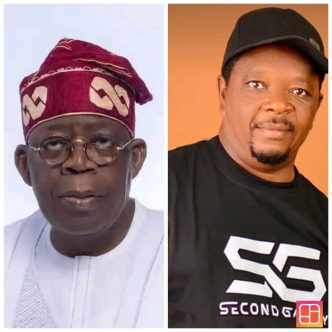
When the presidency becomes synonymous with unresolved legal shadows, the legitimacy of leadership itself becomes a national issue.
For more than three decades, questions — both in legal corridors and in public discourse — have lingered around alleged drug-related investigations involving Nigeria’s president, Bola Tinubu. What once might have been an obscure matter in U.S. legal archives has transformed into a persistent political albatross that strains Nigeria’s democracy, reputation and public trust.
*A History That Refuses to Fade*
The earliest version of this narrative reaches back to the early 1990s, when a Chicago drug ring became the subject of criminal investigation in the United States. U.S. federal courts later recorded that — as part of litigation connected to that case — over $460,000 in bank accounts linked to Mr. Tinubu were forfeited to the U.S. government.
During cross-examination in a Nigerian election tribunal, a witness admitted that the forfeited funds came from narcotics dealing and money-laundering proceeds. That matter was raised during legal challenges to Tinubu’s election victory in 2023.
In April 2025, the United States District Court for the District of Columbia ordered the Federal Bureau of Investigation (FBI) and the Drug Enforcement Administration (DEA) to release records related to the alleged investigation into Tinubu’s involvement in drug trafficking. Judge Beryl Howell ruled that these agencies must search for and process non-exempt records tied to Freedom of Information Act (FOIA) requests.
The Presidency dismissed the significance of the order, claiming the records were already in the public domain and would reveal nothing new, while rejecting any suggestion of illegality.
However, that judicial action — and ongoing public curiosity about what the records contain — continues to cast a long shadow over Mr. Tinubu’s tenure.
*Why This Matters Beyond Legal Technicalities*
For heads of state in established democracies, unresolved investigations or unclarified controversies are seldom buried quietly. They become focal points for opposition, media scrutiny and international perception. In Tinubu’s case, the implications are multifaceted, including,
1. Public Trust and Governance:
In democracies, the social contract between citizens and leadership rests on transparency and accountability. Unresolved questions about illicit activities — particularly those involving drugs, money-laundering and foreign jurisdictions — severely weaken that contract.
Surveys across emerging democracies consistently show that perception of corruption erodes confidence in institutions and depresses voter engagement. In Nigeria, where frustration with governance is already high due to inflation, insecurity and unemployment, unresolved high-level controversies amplify civic cynicism.
*2. Nigeria’s Global Reputation*
Nigeria is already grappling with negative global perceptions — from security challenges to economic instability.
Allegations that a sitting president was once the subject of a U.S. drug ring investigation colour foreign investment decisions, diplomatic relations and bilateral cooperation on security and narcotics interdiction.
Even if allegations are never proven in court, the perception of impunity at the highest level is damaging. Global rankings on governance and corruption may dip further, affecting foreign direct investment and international partnerships.
*3. Rule of Law and Precedent*
The Constitution of the Federal Republic of Nigeria disqualifies candidates from holding office if, among other criteria, they have been found guilty of certain offences involving narcotics or dishonesty.
Though Mr. Tinubu’s case involves foreign forensic and legal contexts, critics argue that the ethical standard for a president should be higher than the bare minimum established by law.
Whether one views this as legal technicality or moral imperative, the principle at stake is clear: public office requires public trust.
*Is Resignation the Only Honourable Option?*
Calls for resignation are never easy or taken lightly in democratic societies. They raise questions about democratic choice, separation of powers, and the will of the electorate. But leadership is not just about winning elections — it’s about standing above controversy, embodying accountability, and safeguarding institutional integrity.
Many Nigerians — in civil society, academia, and the diaspora — argue that Mr. Tinubu’s continued presidency with unresolved drug allegations undermines the moral authority of his office. These voices contend that stepping down would allow Nigeria to reset its moral compass, heal political wounds, and focus on urgent national priorities.
The Risk of Polarization
Critics also warn that forcing resignation through impeachment or judicial fiat could deepen political instability. The 2023 elections and their aftermath revealed how polarized Nigeria already is, with heated debates over legitimacy leading to courtroom battles and social unrest.
Yet, avoiding accountability for fear of instability undermines democracy. True stability emerges not from suppressing difficult conversations, but from resolving controversies openly and justly.
At its heart, the debate about Tinubu and these allegations is a test of Nigeria’s democratic maturity. Can the nation confront uncomfortable truths? Can it uphold transparency at the highest levels? Can the social contract be renewed when it feels frayed?
For many, the answer hinges on whether leadership recognises that credibility is the foundation of governance.
Whether through resignation, full disclosure of all pertinent records, or a transparent judicial process, what Nigeria needs now is less about defending individual reputations and more about restoring faith in its institutions. Only then can the nation move forward — with integrity, unity and a clear vision unclouded by unresolved shadows.
Dozie Nwankodu is an advocate for good governance, and a public affairs analysts. He was the National Coordinator of the Bola Ahmed Tinubu Grassroots Volunteers (BAT-GV). He lives in Lagos, Nigeria. You can reach him on 07046649064, or dozzyreview@gmail.com