




The contemporary socio-political landscape of Yorubaland presents a jarring, deeply unsettling paradox. On one hand, the streets are filled with the vibrant displays, opulence, and unrestrained merriment of cultural pageantry like the Ojude Oba festival. On the other, a systematic, insidious creep of insecurity, territorial encroachment, and existential dread threatens the very survival of the region.
While the Yoruba political elite and a section of the populace indulge in performative gaiety, the homeland is gradually being subsumed by an unrelenting wave of terrorism, mass abductions, and agrarian displacement.
This collective amnesia and strategic silence—deliberately engineered to safeguard partisan alignments and insulate the federal administration for 2027 prospective electoral gains—is not merely hypocritical; it borders on historical cowardice of a people in a landscape littered with casualties.
To characterise the current predicament as a mere collection of isolated criminal incidents or politically motivated is to engage in willful blindness. The historical record paints a bloody picture of a region under siege.
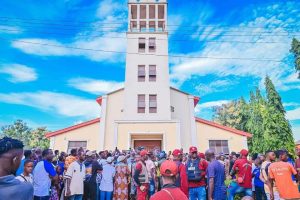
After the massacre at St. Francis Xavier Catholic Church, Owo
The vulnerability of the Southwest was laid bare by the horrific Owo Catholic Church massacre on June 5, 2022, where an assault featuring improvised explosive devices (IEDs) and assault weapons left over 40 worshippers dead inside St. Francis Xavier Catholic Church.
This was preceded by the highly symbolic and audacious assassination of Mrs. Funke Olakunrin on July 12, 2019.
As the daughter of the venerable Afenifere leader, Pa Reuben Fasoranti, her killing along the Ore-Ijebu Ode highway was a direct message to the Yoruba leadership class that no one—regardless of pedigree—was beyond the reach of these marauders.
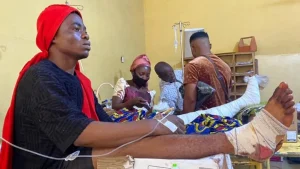
Patients at the hospital after the Owo Catholic Church massacre
In the agrarian belts of Oyo State, particularly within the Ibarapa axis, communities have faced ongoing terror. Prominent indigenous figures who attempted to invest in their homeland have paid the ultimate price. A glaring example is Dr. Fatai Aborode, a large-scale mechanised farmer and philanthropist, who was brutally murdered by armed herdsmen in December 2020 upon returning from his farm in Ibarapa.
Similarly, across the borders of the Southwest states, prominent farmers have been systematically executed or driven off their lands by armed herders, including:
Alhaji Moshood Bola (Ondo), Chief Ogundana (Ekiti), and Odetunde Emmanuel (Osun, kidnapped and traumatised on his father’s farm).

Late Mrs. Fumke Olakunrin, the daughter of Pa Reuben Fasoranti, who was allegedly killed by Fulani herdsmen
The crisis has escalated from remote farmstead incursions into organised, mass territorial raiding designed to inflict psychological terror, crystalising into the catastrophic, infamous Chibok- styled raids of the 2014.
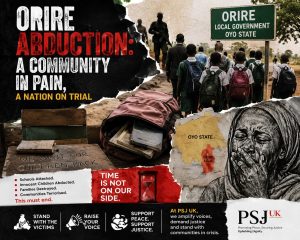
On May 15, 2026, a highly coordinated terrorist assault struck communities in the Oriire Local Government Area of Oyo State, including Yawota and Ahoro-Esinele. In a manner mirroring the mass school abductions of northern Nigeria, heavily armed bandits clad in military camouflage rounded up 39 pupils (some as young as two and three years old) and 7 teachers, including a school principal. The operation was marked by unmitigated brutality.
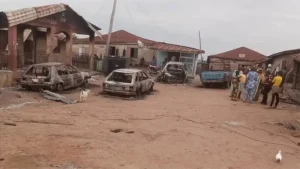
A section of Ibarapa Community destroyed by Fulani Herdsmen during attacks
During the initial raid in Esinele, Joel Adegboye Adesiyan, a 48-year-old teacher, was shot dead while gallantly attempting to shield his young pupils from the invaders. The horror intensified inside the kidnappers’ hideout within the Old Oyo National Park forest.
Two days into captivity, the abductors committed a gruesome act of psychological warfare: they brutally hacked and beheaded Michael Oyedokun, a 57-year-old mathematics teacher and father of two. They filmed the execution and released it on social media to intimidate both the public and the state government.
The theater of insecurity has expanded directly into metropolitan centers. Just weeks after the Oriire catastrophe, on June 3, 2026, the audacious kidnapping of Mrs. Busayo John-Paul (née Adelabu)—the younger sister of the former Minister of Power, Chief Adebayo Adelabu—occurred alongside her 12-year-old twin sons, Peter and Paul, in broad daylight within the Challenge/Ring Road area of Ibadan. This sequence of events leaves no room for debate: the urban elite and vulnerable schoolchildren alike are now fully exposed to the anarchy consuming the hinterlands.

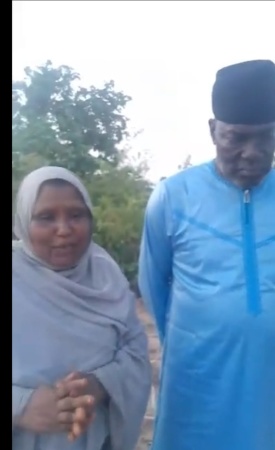
Former Power Minister, Adelabu’s sister who was abducted with her twin boys
The current nonchalance of the Yoruba leadership bears a chilling resemblance to the historical Ilorin precedence, mirroring the modern day conquest, and the complacency of a tribe that led to the permanent loss of Ilorin in the 19th century.
During the twilight of the Old Oyo Empire, internal political rivalries, personal ambitions, and the short-sighted pursuit of power led Afonja, the then Aare Ona Kakanfo (Generalissimo) of Oyo, to form an alliance with foreign elements led by the Fulani cleric Alimi.
Afonja believed he could exploit these external forces to secure his local political dominance. Instead, he was systematically decoupled from his domestic support structure, betrayed, and killed. The foreign elements effortlessly usurped authority, transforming a strategic Yoruba frontier outpost into an emirate. Oyo itself was nearly obliterated in the subsequent decades of that conquest.
Today, history repeats itself as a tragedy of willful ignorance. The current disposition of Yoruba political actors and traditional institutions—who consistently downplay coordinated attacks, mass clearings of agrarian communities, and high-profile abductions—is driven by a desire to preserve an illusion of domestic tranquility. This artificial stability is maintained to safeguard political interests and avoid complicating future – 2027 federal electoral calculations. By subjugating the physical security of their constituents to peripheral political gamesmanship, contemporary leaders are walking the exact path of Afonja.
Recourse to historical warnings, territorial conquest in the modern era does not always begin with a formal declaration of war. It advances through the systematic displacement of local populations, the unchecked occupation of ancestral forests, the disruption of agrarian economies, and the psychological subjugation of a people who become too terrified to send their children to school or till their own soil.
The long-term consequences of this collective insensitivity are both predictable and devastating:
1.Agrarian Implosion and Food Insecurity: As farmers are systematically murdered or chased off their lands in Ekiti, Osun, Oyo, and Ondo, the agricultural backbone of the Southwest is facing rapid decay. A region that cannot feed itself becomes entirely dependent on external suppliers, yielding a critical lever of self-determination.
2.The Collapse of the Educational and Economic Safe Haven: The Southwest has long positioned itself as an educational bedrock and economic refuge. However, when schools in Oyo State are forced to shut down due to active terrorist cells operating out of the Old Oyo National Park, and when citizens are executed on social media, capital flight accelerates, investments dry up, and the societal fabric tears.
3 Existential Capitulation: The ultimate end of cowardice disguised as political sophistication is total subjugation. If the current trajectory of unchecked rural penetration, school raids, and urban vulnerability persists, the Yoruba people face the prospect of becoming secondary citizens in their ancestral homeland.
Celebrating cultural milestones like Ojude Oba is a legitimate expression of heritage, but doing so while ignoring the decay of regional security architectural frameworks is an exercise in profound hypocrisy. Pageantry cannot repel an armed insurgency, and expensive fabrics cannot serve as armor against territorial displacement.
If the Yoruba leadership class and the wider populace do not discard their political docility, confront these security challenges directly, and demand uncompromising accountability, the eventual historical verdict will be severe.
The region risks waking up to a reality where its culture is celebrated only in diaspora enclaves, having lost the very soil that gave birth to its identity.
Dozie Nwankodu is an advocate for good governance and development. He is the Publisher/Editors-In-Chief of GlobalReporters.Ng. He lives in Lagos Nigeria.
Email: info@.globalreporters.ng,
Phone: 08025943729