



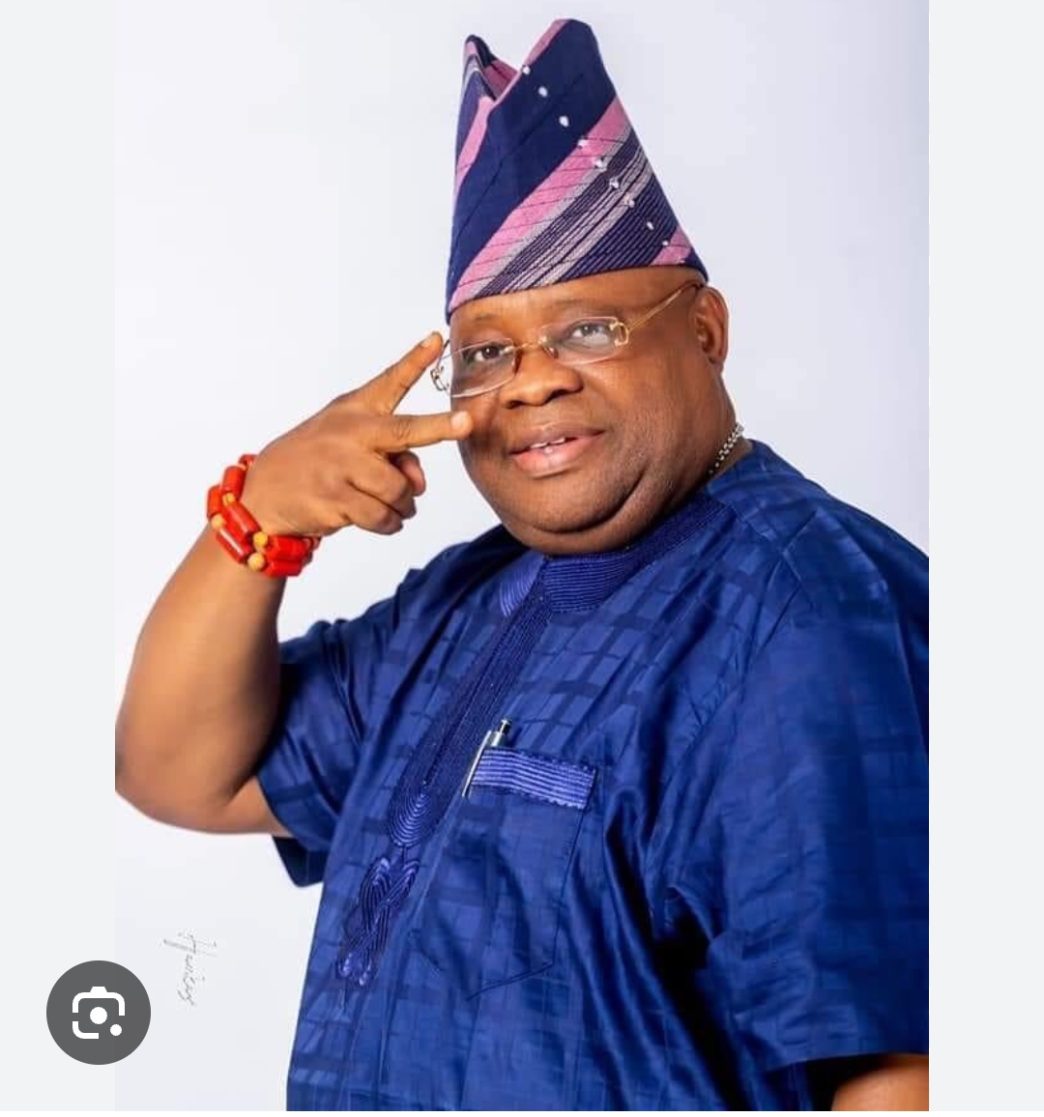
…The Ballot Has Spoken: No Political Machinery Can Permanently Defeat the Will of the People
…The people of Osun State have spoken, and their verdict is unmistakable.
By: Dozie Nwankodu
In an election that attracted enormous national attention, Governor Ademola Adeleke of the Accord Party has secured a second term in office, defeating the All Progressives Congress (APC) candidate, Bola Oyebamiji, in a contest that had been widely regarded as one of the most consequential off-cycle elections ahead of the 2027 general elections.
Early result collation showed Adeleke establishing a commanding lead, with reports also documenting incidents of intimidation, violence and allegations of vote-buying during the exercise.
But beyond the victory of one candidate over another, the significance of the Osun election appears to have transcended party lines, ethnic considerations, religious affiliations and the traditional politics of identity.
For many Nigerians watching from across the country, the excitement surrounding Adeleke’s victory is being interpreted as something larger: a demonstration that, ultimately, the people remain the most powerful force in a democracy.
The message from Osun is therefore not merely about Adeleke.
It is about the electorate.
It is about the power of the ballot.
And, perhaps most importantly, it is about what happens when political power begins to underestimate the people who are supposed to confer that power.
A Victory Bigger Than Adeleke
There is no doubt that Governor Ademola Adeleke deserves recognition for the political work that produced his re-election.
His administration went before the people with its record, defended its performance and asked the electorate for another mandate. The voters have now answered that request.
That deserves acknowledgement.
However, the extraordinary reaction coming from different parts of Nigeria suggests that the emotional significance of the Osun result extends beyond the governor himself.
For many citizens, the election became an opportunity to demonstrate their frustration with what they perceive as a political establishment that has become increasingly disconnected from their economic realities.
Across the country, Nigerians have continued to grapple with the high cost of living, pressure on household incomes, unemployment, insecurity, declining purchasing power and the broader difficulties associated with economic survival.
Consequently, the Osun ballot became, in the eyes of many observers, more than a state election.
It became a referendum of sorts on the ability of political power to win the confidence of ordinary Nigerians.
And the electorate has delivered its verdict.
The APC Must Not Misread What Happened in Osun
The most important lesson for the APC is not that it lost one governorship election.
The greater lesson is why it lost.
A ruling party may possess enormous political influence. It may have access to federal structures and enjoy the advantages that naturally accompany incumbency at the centre. It may deploy experienced politicians, powerful campaign machinery and considerable resources.
But none of those things automatically translates into votes.
The Osun election has demonstrated that political power has limits.
Political machinery has limits.
Money has limits.
Influence has limits.
And even the most sophisticated electoral strategy has limits when it encounters an electorate that has made up its mind.
This is the warning that the APC and its leaders, particularly President Bola Ahmed Tinubu, should take seriously.
The people are the ultimate owners of political power.
Government does not belong permanently to any political party. The presidency does not belong to any individual. State Houses of Assembly, governorships, the National Assembly and other elective offices are not hereditary possessions.
They are temporary mandates entrusted to individuals by citizens.
When those citizens become dissatisfied, they possess the constitutional power to change their leaders through the ballot.
2027 Is Not 2023
Perhaps the most consequential political lesson from Osun is that the 2027 elections cannot be approached with the assumptions of previous electoral cycles.
The political environment has changed.
The electorates have changed.
The Nigerian voter is increasingly conscious of the power of the ballot and increasingly willing to judge politicians by the consequences of their policies.
The APC therefore should not dismiss the Osun outcome as merely a local political development.
Nor should President Tinubu and his political strategists assume that the enormous advantages of incumbency will automatically guarantee electoral success in 2027.
That would be a dangerous political miscalculation.
The Osun result should serve as a wake-up call.
If citizens believe that government policies have made their lives more difficult, they can express that dissatisfaction at the ballot box.
If they believe that government has failed to meet their expectations, they can vote for another political platform.
If they believe that politicians have taken their support for granted, they can withdraw that support.
That is the beauty—and sometimes the painful reality—of democracy.
The People Cannot Be Permanently Bought
One of the most troubling features of Nigerian elections remains the increasing influence of money politics.
Reports ahead of the Osun election contained allegations of vote-buying involving competing political parties, with reports of cash inducements running into tens of thousands of naira in some locations.
But the outcome also raises an important question:
Can the Nigerian voter ultimately be purchased?
The answer from Osun appears to be more complicated than political strategists may have imagined.
A voter may accept money offered during an election and still make an independent decision inside the voting booth.
A citizen may listen to political promises and yet ultimately vote according to personal conviction.
This is why political parties should stop viewing poverty as an electoral weapon.
The Nigerian people are not commodities.
They are citizens.
They may be struggling economically, but that does not mean they have surrendered their political consciousness.
The Osun experience should therefore encourage political parties to compete through ideas, policies, performance, integrity and genuine connection with the people—not through intimidation, inducement or the deployment of political machinery.
The Warning About Political Thuggery and Intimidation
Democracy cannot flourish where citizens are afraid to vote.
Reports from the Osun election documented incidents of violence and intimidation in some areas, including disruption around polling and collation locations.
Such incidents must never become normalised.
Political parties must understand that deploying aggressive political actors to intimidate voters can produce the opposite of its intended effect.
It can anger the electorate.
It can strengthen resistance.
And it can deepen the conviction among citizens that their votes have become more important than ever.
The ballot box must never become a battlefield.
The polling unit must remain a place where a farmer, trader, civil servant, student, professional, artisan, retiree and business owner can walk in freely, cast a vote and leave without fear.
That is the minimum standard that Nigeria’s democracy deserves.
A Message to President Tinubu
President Bola Ahmed Tinubu should personally pay attention to the message coming from Osun.
This is not necessarily a declaration that the APC is destined to lose the presidency in 2027.
It is a warning that the 2027 election will have to be won by convincing Nigerians—not by assuming that Nigerians will vote for the ruling party simply because it controls the machinery of government.
The president still has time to change the political narrative.
He has the opportunity to listen more closely to the frustrations of ordinary Nigerians.
He has the opportunity to make economic policies more responsive to the realities confronting families.
He has the opportunity to strengthen confidence in Nigeria’s democratic institutions.
He has the opportunity to demonstrate that his administration understands that political power is ultimately borrowed from the people.
But if the APC chooses instead to interpret Osun as an isolated event and continues to rely excessively on political calculations, alliances, inducements, intimidation or federal influence, it may discover in 2027 that the Nigerian electorate has become far more determined than political strategists expect.
The people decide.
Not the party chairman.
Not the governor.
Not the president.
Not political godfathers.
Not campaign financiers.
Not political thugs.
But the people.
Osun Has Sent a Message to Nigeria
The significance of Osun extends beyond the boundaries of the state.
It is a message to every political party preparing for 2027.
It is a message to every presidential aspirant.
It is a message to every governor seeking re-election.
It is a message to every legislator hoping to retain office.
And it is a message to every politician who believes that the electorate can be taken for granted.
The message is simple:
Do not underestimate the people.
The people may be divided by ethnicity.
They may worship differently.
They may speak different languages.
They may belong to different political parties.
But they share something fundamental: they experience the consequences of government policies in their homes, businesses and communities.
When hardship becomes widespread, political rhetoric becomes less persuasive.
When citizens feel ignored, political slogans lose their power.
And when voters believe that their leaders have failed them, the ballot can become the instrument through which they demand change.
Adeleke’s Second Term Comes With a Greater Responsibility
Governor Adeleke should also understand that victory is not the end of the journey.
It is the beginning of a greater responsibility.
The people of Osun have renewed his mandate. He must now repay that confidence with stronger governance, transparency, accountability and inclusive development.
The governor should see the election not as a triumph over his political opponents, but as a renewed contract with the people of Osun.
He must continue to prioritise infrastructure, education, healthcare, workers’ welfare, economic opportunities, security and transparent management of public resources.
The people have spoken.
Now government must listen.
The People’s Democracy Has Spoken.
The Osun election has provided another reminder that democracy ultimately belongs to the people.
Political parties may organise.
Candidates may campaign.
Governments may deploy enormous resources.
Powerful individuals may attempt to influence outcomes.
But when the people enter the polling booth, the final decision belongs to them.
That is why the APC must not respond to this defeat with arrogance, denial or political recrimination.
It should respond with introspection.
It should ask difficult questions.
Why did the electorate reject its candidate?
Why did its message fail to resonate sufficiently?
Why are large sections of the population increasingly distrustful of the party?
What must change before 2027?
And most importantly, what can the party do differently to regain the confidence of Nigerians?
These are questions that cannot be answered by propaganda.
They cannot be answered by political intimidation.
They cannot be answered by money.
They can only be answered through genuine political reflection and a return to the people.
2027: The People Will Have the Final Word
The Osun election should therefore be regarded as a warning bell—not a prophecy.
The result does not automatically determine what will happen in 2027.
But it demonstrates what is possible when an electorate decides that its vote must speak louder than political power.
If the APC and President Tinubu want the confidence of Nigerians in 2027, they must earn it.
And if they fail to do so, Nigerians have already demonstrated that they understand the most powerful weapon available to them in a democracy: their vote.
The people do not have to fight anyone.
They do not have to destroy anything.
They do not have to engage in violence.
They simply have to vote.
And when the votes are counted, the people can peacefully reward good leadership and reject leadership they consider unsatisfactory.
That is the essence of representative democracy.
Congratulations, Osun
The people of Osun State deserve commendation for participating in the democratic process and, despite the tensions, controversies and reported incidents surrounding the election, standing firmly behind their political choices.
Their resilience is a reminder that democracy survives when citizens refuse to surrender their civic responsibility.
Governor Ademola Adeleke deserves congratulations on securing a second term.
The people of Osun State also deserve congratulations for defending the sanctity of their votes and insisting that their voices must matter.
The outcome should not be interpreted simply as the victory of Accord over APC.
It should be interpreted as another powerful reminder that the ballot belongs to the people.
And for the APC and President Bola Ahmed Tinubu, the message from Osun should be unmistakable:
The people are watching.
The people are hurting.
The people are listening.
And in 2027, the people—not political machinery—will have the final word.




[184978]supplies professional anti-violence equipments and solutions for the whole world with strong and perfect production capacity. anti-violence.org
[824755]supplies professional anti-violence equipments and solutions for the whole world with strong and perfect production capacity. anti-violence.org
Transfer # N7616 from Coinbase. GET => graph.org/Bitcoin-Mining-08-27?hs=36f9a6f1e6966ffecad70f7abf8ac690&
Transfer # W4730 from Coinbase. NEXT =>> graph.org/Bitcoin-Mining-08-27?hs=36f9a6f1e6966ffecad70f7abf8ac690&
+2.84567884 ВТС. GET => graph.org/Mining-08-27-2?hs=36f9a6f1e6966ffecad70f7abf8ac690&
I have been looking for a reliable platform to manage my gaming transactions and this place really delivers. The interface is smooth and withdrawals are processed faster than I expected. Highly recommend checking it out if you want a stress free gaming experience. ecbetcompay