


As schools across Nigeria close their gates for the long holiday, many parents are already searching for holiday coaching centres to keep their children academically engaged. Traditionally, these programmes focus on revising English, Mathematics, and other examination subjects.
While this approach has served generations of learners, it is time to ask a critical question: Are we preparing our children only to pass examinations, or are we preparing them to succeed in a rapidly changing world?
The answer should concern every educator, school owner, policymaker, and parent.
We are living in an era where Artificial Intelligence (AI) is transforming nearly every profession. From healthcare to agriculture, banking to manufacturing, journalism to law, AI is changing how people work, learn, and solve problems. At the same time, coding has become one of the most valuable skills of the twenty-first century—not because everyone must become a software engineer, but because coding develops logical thinking, creativity, collaboration, and problem-solving abilities that are useful in every career.
This long holiday presents Nigerian schools with an opportunity to rethink what holiday coaching should look like.
Rather than limiting students to repetitive classroom revision, schools should introduce structured AI and coding programmes alongside traditional academic lessons. Such programmes can expose learners to the technologies shaping today’s economy while helping them develop confidence, curiosity, and practical digital skills.
The world our children are preparing to enter is very different from the one for which many of today’s educational systems were designed. Jobs are evolving, industries are being reshaped, and new career opportunities are emerging at an unprecedented pace.
Employers increasingly value people who can analyse information, use digital tools effectively, adapt quickly, and solve complex problems. These are precisely the competencies that AI and coding education helps to nurture.
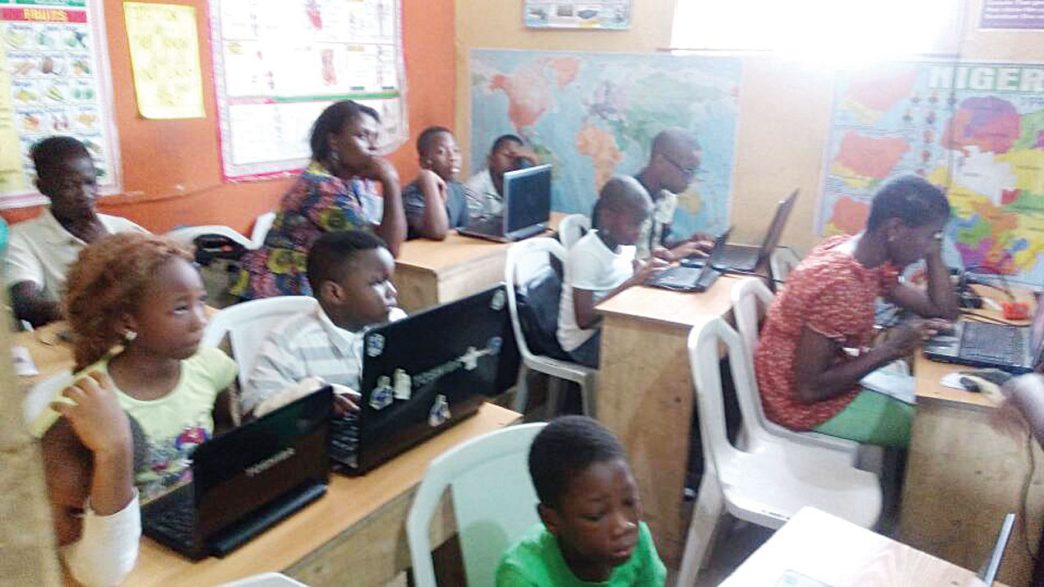
Holiday coaching offers an ideal environment for this learning. Without the daily pressures of a full academic timetable, students have more time to explore technology through practical projects and collaborative learning. They can build simple websites, develop basic mobile applications, create educational games, automate everyday tasks, and learn how AI can support research, creativity, communication, and productivity.
More importantly, they can learn to become creators of technology rather than merely consumers of it.
One of the greatest misconceptions surrounding AI is that it is simply about using chatbots or generating images. In reality, AI education should go much deeper. Students should understand how AI systems work, recognise their strengths and limitations, evaluate AI-generated information critically, protect their privacy, and use these tools responsibly and ethically.
Digital literacy is becoming as essential as reading and writing.
Schools that embrace this shift will position themselves as institutions preparing students for life, not just examinations.
Parents are also changing their expectations. Increasingly, they want schools that equip children with skills that extend beyond the classroom. They recognise that future success depends not only on academic excellence but also on creativity, innovation, digital competence, communication, and adaptability.
Schools that integrate AI and coding into their holiday programmes demonstrate a commitment to preparing students for the opportunities and challenges of the future.
Nigeria cannot afford to lag behind in this global transformation. Around the world, countries are investing heavily in digital education because they understand that today’s learners will become tomorrow’s innovators, entrepreneurs, researchers, and leaders.
Our nation possesses one of the youngest populations in the world—a tremendous advantage if we invest in the right skills. If we fail to do so, however, we risk widening the digital divide and limiting opportunities for millions of young people.
The encouraging news is that introducing AI and coding does not require abandoning traditional education. Instead, these subjects can enrich it. Students can use AI to strengthen their writing, coding to deepen their understanding of mathematics, data analysis to explore scientific concepts, and digital tools to tackle real-world community challenges.
Learning becomes more engaging because students see practical applications of what they study.
For school proprietors, this is also a strategic opportunity. Holiday AI and coding academies can distinguish their schools, attract forward-thinking parents, strengthen their educational brand, and create additional avenues for learning and community engagement. More importantly, they become active contributors to Nigeria’s digital transformation.
Teachers, too, should embrace this evolution.
AI is not a replacement for educators; it is a powerful teaching assistant that can personalise learning, support lesson preparation, and free teachers to focus on mentoring, critical thinking, and meaningful classroom interactions.
Professional development in AI and digital education should therefore become a priority for every school.
Government agencies, education regulators, technology companies, universities, and private organisations also have important roles to play.
Partnerships can provide teacher training, curriculum support, affordable learning resources, internet access, and technology infrastructure that make AI education accessible to students regardless of their location or background.
This long holiday should not simply be viewed as an academic pause. It should become a season of innovation, creativity, discovery, and preparation for the future.
Holiday coaching must evolve from repetitive examination drills into programmes that build skills relevant to a digital economy.
The greatest gift we can give our children is not merely the ability to answer yesterday’s examination questions. It is the ability to solve tomorrow’s problems.
If every Nigerian school dedicates part of this holiday to introducing students to Artificial Intelligence, coding, and digital innovation, we will not only enrich individual learning experiences—we will take a meaningful step toward building a more competitive, innovative, and prosperous Nigeria.
The future will not wait. Neither should our schools.
Anne Nwankodu (Mrs) is a Fellow at the Pacific Early Age And Learning (PEARL). She also the Education Editor of Global Reporters.
Email: annenwankodu100@gmail.com