




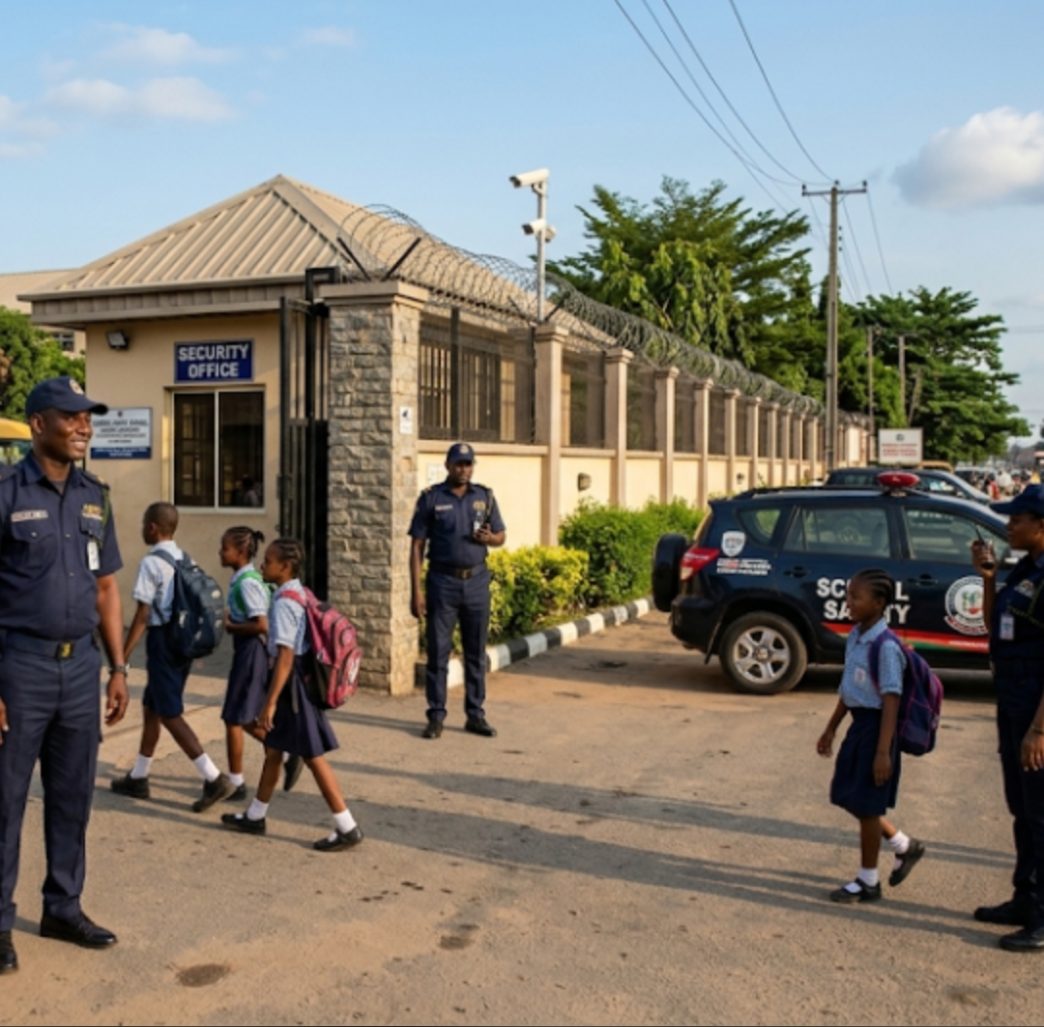
The contemporary Nigerian educational landscape is caught in the throes of a harrowing paradox. Institutions established to serve as the cradles of enlightenment, intellectual flourishing, and national rebirth have tragically metamorphosed into prime hunting grounds for predatory non-state actors.
The recurring horror of mass pupils and student abductions—stretching across Kaduna, Niger, Kebbi, Kogi, Oyo, and Borno states—is no longer an sporadic crisis. It has evolved into a systematic, existential onslaught against the foundational architecture of our future.
When the sanctuary of a classroom is breached by the cacophony of gunfire and the terror of armed bandits, it is not merely a localised security failure; it is a profound assault on the nation’s collective psyche.
While state and federal authorities struggle with the labyrinthine complexities of overstretched security architectures and the bureaucratic friction dogging initiatives like the $145-billion Safe Schools Initiative, school administrators cannot afford the luxury of passive expectation.
For schools across the federation, complacency is an abdication of existential duty. To safeguard the lives of the next generation, educational leadership must shift from a posture of reactive vulnerability to one of aggressive, comprehensive institutional fortifying.
1. Shattering the Illusion of Invulnerability: A Psychological Reorientation :-
The primary vulnerability of many educational institutions lies not in their porous perimeters, but in the pervasive, tranquilising illusion of “it cannot happen here.”
Mass abductions are no longer geographic anomalies confined to specific administrative corridors; they are an expansive enterprise driven by asymmetric economic incentives.
School proprietors, boards of governors, and vice-chancellors must undergo an immediate paradigm shift. Security must cease to be treated as an administrative afterthought or a line-item budget to be trimmed during financial austerity. It must be elevated to a core operational pillar, equal in institutional weight to academic excellence and fiscal management.
To ignore the imminent threat environment is to invite catastrophic institutional ruin.
2. Hardening the Perimeter: Beyond Symbolic Deterrence:-
A disturbing commonality among targeted institutions is the structural vulnerability of their physical architecture. Grand structural entrances frequently give way to dilapidated, porous, or completely non-existent perimeter boundaries. Schools must aggressively commit to physical security hardening, including these all-important strategies:
(a). Defensive Architecture: Structural boundaries must be built to withstand deliberate breaches. Fencing should not be decorative; it must be high, reinforced, and topped with anti-climb concertina wire.
(b). Access Control and Access Rationalisation: The era of open-campus vulnerability is over. Schools must implement single-point entry protocols for vehicles and pedestrians alike. All auxiliary, unmonitored access paths must be permanently sealed.
(c). Technological Force Multipliers: Relying solely on human sightlines is a flawed strategy. Deploying low-light Closed-Circuit Television (CCTV) cameras, motion-activated floodlights along blind spots, and perimeter-intrusion detection sensors provides continuous surveillance, stripping attackers of the element of tactical surprise.
3. The Professionalisation of Campus Security Intermediaries:
The traditional practice of employing aged, untrained, and poorly compensated watchmen armed with nothing more than batons and flashlights is a profound systemic failure. Against highly mobile, battle-hardened syndicates wielding automatic weapons, these individuals are tragically ineffective.
Institutions must rapidly upgrade their internal security personnel. This necessitates the recruitment of agile, professionally trained assets—ideally vetted veterans from the armed forces or law enforcement. These agents must be thoroughly trained in counter-surveillance, crisis management, and immediate trauma response. Furthermore, their compensation packages must reflect the high-stakes nature of their responsibility; a poorly remunerated security guard is an acute vulnerability susceptible to compromise by criminal cartels.
4. Operationalising Intel-Driven Early Warning Systems:
Rarely do mass abductions occur in a complete informational vacuum. Asymmetric actors routinely conduct reconnaissance, map out logistical routes, and exploit local vulnerabilities prior to launching an assault.
Schools must actively embed themselves into their immediate human geography by building local intelligence networks. This requires cultivating reciprocal, high-trust relationships with host communities, traditional rulers, localised trade groups, and transport unions.
By fostering open communication, schools can tap into grassroots intelligence pipelines that detect unusual vehicular movements, unfamiliar faces, or sudden shifts in local dynamics.
Security is collaborative; an isolated school is an exposed target.
5. Institutionalising Crisis Rehearsals and Survival Protocols:
When a security crisis hits, panic is the ultimate accelerator of casualties. The chaos that ensues during an active raid often leaves students and staff paralysed or fleeing directly into danger. To counteract this, schools must design and practice comprehensive emergency response drills.
Every institution must formulate localised “Lockdown, Evacuation, and Concealment” protocols. These procedures should dictate immediate actions such as the instantaneous sealing of dormitories, the designation of reinforced safe rooms, and silent distress signal systems linked directly to nearby military checkpoints or police divisions.
These survival movements must become second nature to students and faculty through regular, unannounced drills, transforming chaotic panic into disciplined, life-saving execution.
Conclusively, the crisis of insecurity and mass school abductions demands an aggressive, clear-eyed confrontation with reality.
Educational institutions can no longer operate under the naive assumption that their noble societal purpose shields them from violence.
When criminal syndicates look at a school, they do not see a centre of learning; they see high-value soft targets ripe for exploitation.
To preserve the sanctity of education and protect the lives of the children entrusted to their care, Nigerian schools must adopt a proactive, defensive posture. It requires significant capital investment, unyielding discipline, and strategic clarity.
The choice before school administrators is stark but simple: invest aggressively in comprehensive, modern security measures today, or risk becoming the tragic headline of tomorrow.
The survival of our educational institutions, and by extension the future of the nation, hinges entirely on this resolve.
Dozie Nwankodu is a Media consultant, and the Publishe and Managing Editor of GlobalReporters.ng.
He is also the National President of Independent Media Editors And Publishers Guild Of Nigeria.
He writes from Lagos, Nigeria
Email: info@globalreporters.ng